


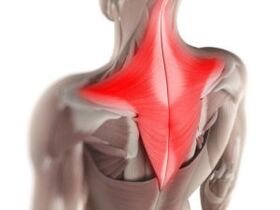
Pain under the left or right shoulder blade in the back does not mean that there is a problem in that particular area of the body.Unpleasant discomfort is transmitted along the nerve branches to the spinal cord, and in the same way is reflected at a long distance from the real source of inflammation.Radiating pain syndrome makes diagnosis difficult.Experienced doctors in such a situation rely on the overall clinical picture.Leading and secondary symptoms will tell you that there may be pain under the left shoulder blade, under the right, or on both sides at once.
Provocators of pain paroxysm

If we summarize the causes of pain in the shoulder blades in one group, then it will look more than impressive.
Pain that appears on the left under the shoulder blade is a fairly common symptom that can occur in men, women and even children.At first glance, such symptoms seem trivial, but in fact, pain under the left shoulder blade in the back can be a harbinger of a number of dangerous diseases.
There are many reasons for the appearance of such a pain syndrome, and they are usually not at all related to problems in the shoulder blades themselves.
First, about the negative factors that can provoke pain on any side.
Muscles and nerve fibers
Intercostal neuralgia.A striking symptom is spontaneous stabbing pain.Near the spine, in the area where the nerve is affected, "lumbago" is formed.Gives to the left or right scapula, the area of the projection of the stomach, the heart.During attacks, any movement and breathing increase the severity of painful paroxysms.Between attacks, sensitive intercostal paresthesia is noted.
Myofascial pain syndrome.Trigger points or areas of compaction form in the muscle tissue.In the initial stage, the pain symptom appears when the affected muscles are loaded.Over time, pain becomes a constant escort.Deep myofascial pain below the shoulder blades does not resolve with rest and may mimic cardiac, epigastric, and hepatic attacks.
Musculoskeletal system
Humeroscapular periarthrosis and periarthritis.The disease is manifested by aching pain radiating to the scapula from the affected joint, neck and distal parts of the arm.Discomfort occurs when attempting to perform an action with a large range of motion.As the syndrome progresses, the pain becomes background and intensifies at night.
Osteochondrosis of the cervical vertebrae.At first, dull pain in the neck and back of the head predominates.The more significant the degenerative changes in the cartilage and bone tissue, the more the nerve endings are compressed, along which the pain symptom spreads to the shoulder girdle and shoulder blades.The movements are accompanied by crunching sounds, dizziness, spots in the eyes and ringing in the ears.
Visceral organs
Stomach ulcer.During exacerbations, a characteristic feature of the pathology is the appearance of pain in the epigastric region and behind the sternum.If the body of the stomach is affected, the discomfort appears on the left, with an ulcer of the pyloric part - on the right.Pain sensations radiate below the shoulder blade, in the lower back and spine.Worse after eating.Night pains and hunger pangs may develop.
pyelonephritis.The pain syndrome is localized on the side of the inflamed kidney, in the lower part of the chest.When tapped, it radiates to the lower back and under the shoulder blade.
Common signs:
- urination disorder;
- increased body temperature;
- weakness;
- increased sweating.
Bilateral pneumonia.The first signs are chills, a significant increase in temperature, rapid and shallow breathing.When I try to take a deep breath it hurts under my shoulder blades on both sides.
Acute bronchitis.It begins with symptoms of a common cold, which is accompanied by pain in the muscles of the back and upper limbs.
Pain on the left side
When pain occurs in the back of the left scapula, most often the causes lie in cardiovascular diseases.
Myocardial infarction.The source of the pain is in the chest.It projects into the left scapula and interscapular space, neck, shoulder, ear, jaw.The intensity of the pain depends on the degree of damage to the myocardium.Patients, when describing an attack, use the epithet "dagger".
Angina pectoris.The pain can be tolerable as it just pulls under the left shoulder blade, or it can be burning and pressing.Unpleasant sensations spread mainly behind the sternum, under the shoulder blade, in the arm and shoulder on the left side.
Expressed signs include:
- feeling of lack of air;
- suffocation;
- pale skin;
- sweating.
Similar symptoms occur with coronary heart disease and cardiac syndrome.The false clinical picture of myocardial infarction increases the feeling of fear and anxiety in patients, which in turn increases the intensity of painful abnormalities.
Right pain syndrome

Pain under the shoulder blade on the right behind the back is considered a veiled symptom of inflammatory damage to the liver, pancreas and gall bladder.
Cholecystitis.A vivid representative of referred pain in the right scapula.Patients suffering from a chronic form of the disease quickly recognize the initial stage of exacerbation through a classic attack.A dull pain that arises on the right side of the intercostal space radiates up under the scapula, in the lumbar region and the shoulder.
Common symptoms include:
- nausea;
- weakness;
- sweating;
- bitter taste;
- increase in temperature indicators.
Hepatic colic.Clinical signs of cholelithiasis.Pain sensations with increased intensity begin in a state of rest.They are located in the projection of the gallbladder, just below the right hypochondrium, radiating to the shoulder blade, neck and shoulder.A painful attack tears from the inside, causing the patient unbearable suffering.Abdominal distension and sometimes uncontrollable vomiting with bile is observed.The duration of the painful attack varies from 15-20 minutes to 6-7 hours.
Pancreatitis.The exacerbation phase is characterized by a throbbing pain syndrome in the region of both shoulder blades.If the head of the pancreas is inflamed, the pain is felt mainly on the right side.Painful discomfort is characterized by enviable persistence.It does not worsen with inhalation or straining and does not disappear with changes in body position.
Biliary dyskinesia.Sharp wave-like pain similar to colic occurs after non-compliance with the diet, excessive physical exertion and psycho-emotional stress.Painful foci are identified in the hypochondrium, scapula and shoulder on the right side.On palpation, the place where the gallbladder is located is the most painful.
There are symptoms of dyspeptic disorders and neurosis-like conditions:
- nausea;
- burping;
- flatulence;
- infrequent stools;
- diarrhea;
- irritability;
- increased fatigue;
- lacrimation;
- sleep problems.
Outside the periods of exacerbation, a feeling of heaviness and dull pain in the hypochondrium are sometimes found.
Without a detailed diagnosis, it is difficult to distinguish the cause of pain under the shoulder blade, even for an experienced medical professional.
It is not necessary to self-diagnose the disease or drink handfuls of analgesics in the hope that everything will be fine.It would be more reasonable to visit a local therapist, who will collect the necessary anamnestic information and redirect to a specialized specialist for adequately selected treatment.